
Last Updated: February 2026
Behind every immigration case is a family. This is the story of one California family’s journey through the family-based immigration process — from years of separation to the day they were finally together again.
At Bueno Immigration, we handle dozens of immigration cases at any given time. Each one involves real people with real hopes, fears, and dreams. While we cannot share the specifics of any individual client’s case due to attorney-client privilege, we believe that understanding how the immigration process works in practice — through a realistic, composite case study — can help other families who are facing similar situations.
The following story is based on a composite of real case elements, with all identifying details changed to protect client confidentiality. The names, nationalities, locations, and specific facts have been altered. This case study is provided for educational purposes only and does not guarantee any particular outcome. Every immigration case is different, and results depend on the unique facts and circumstances involved.
The Family’s Situation: Years of Separation
Maria had been living in California for over fifteen years. She had come to the United States from a Latin American country in her early twenties, following a path that millions of immigrants have taken — crossing the border without inspection after her tourist visa application was denied. She had no criminal record, had worked steadily, paid taxes, and built a life in a mid-sized California city.
Maria had become a lawful permanent resident (Green Card holder) several years earlier through her employer, who had sponsored her for a labor certification and an employment-based immigrant visa. The process had taken years and cost thousands of dollars, but when she finally held that Green Card in her hand, she felt a sense of security she had not known in over a decade.
But one thing was missing: her family.
Maria’s husband, Carlos, and their two children — Sofia, age 14, and Diego, age 8 — were still in their home country. Carlos had been raising the children largely on his own, with help from extended family, while Maria sent money home every month. They spoke by video call every evening, but the distance was excruciating.
Sofia barely remembered living with her mother. Diego had never known life with both parents under the same roof. And Carlos, though proud and supportive of Maria’s sacrifice, was exhausted and lonely.
Maria wanted to bring her family to the United States. But she was terrified that the process would somehow expose her past — specifically, the years she had spent in the U.S. without authorization before obtaining her Green Card. She had heard stories of families being torn apart by the immigration system, and she was afraid to make a wrong move.
That is when she came to Bueno Immigration.
The Initial Consultation: Understanding the Options
During Maria’s first consultation, our attorneys listened carefully to her story and asked detailed questions about her immigration history, her family members, and her goals. We needed to understand the full picture before recommending a strategy.
Here is what we identified:
The Straightforward Part
As a lawful permanent resident, Maria had the legal right to petition for her spouse (Carlos) and her unmarried children under 21 (Sofia and Diego) through what is known as the F2A preference category for family-based immigration. This would involve filing Form I-130 (Petition for Alien Relative) for each family member.
The Complicated Part
Because Carlos and the children were in their home country, they would need to go through consular processing. However, Carlos had previously entered the United States without authorization many years ago and had stayed for approximately eight months. His unlawful presence triggered the three-year bar on admissibility, which needed careful analysis.
Additionally, we discussed the possibility of Maria naturalizing (becoming a U.S. citizen) before or during the family petition process. If Maria became a citizen, Carlos and the children would be reclassified as immediate relatives — a category with no annual visa number limits and typically faster processing.
The Legal Strategy
After thoroughly analyzing Maria’s situation, we developed a two-track strategy:
Track 1: File I-130 Petitions Immediately
We filed Form I-130 petitions for Carlos, Sofia, and Diego right away. The sooner the petitions were filed, the sooner a priority date would be established. Each petition required:
- Proof of Maria’s lawful permanent resident status
- Proof of her relationship to each family member
- Photographs, biographical information, and supporting documents
- Filing fees
Track 2: Pursue Naturalization for Maria
Simultaneously, we began preparing Maria’s Form N-400 (Application for Naturalization). Maria met all requirements:
- LPR for at least five years
- Physically present for 30+ months of prior five years
- Continuous U.S. residence
- Good moral character
- Able to pass English and civics tests
The Timeline: Patience, Persistence, and Progress
Immigration cases rarely move in a straight line. Here is how Maria’s case unfolded over approximately 18 months:
Months 1-2: Filing and Receipt
We filed the three I-130 petitions and the N-400 application. Within a few weeks, we received receipt notices from USCIS confirming that all four applications had been accepted and were being processed. Maria’s priority date for the I-130 petitions was established.
Months 3-5: Waiting and Preparation
During this period, we waited for USCIS to schedule Maria’s naturalization interview. We used this time productively — helping Maria study for the civics exam, gathering additional documentation for the family petitions, and ensuring Carlos had begun collecting the documents he would need for his consular interview.
Month 6: Maria’s Naturalization Interview
Maria attended her naturalization interview at the USCIS field office in California. She was nervous, but she had prepared thoroughly. The officer asked her the standard civics and English questions, reviewed her application, and asked about her travel history and moral character. She passed. The officer approved her N-400 application on the spot and scheduled her for a naturalization ceremony the following month.
Month 7: Maria Becomes a U.S. Citizen
Maria took the Oath of Allegiance at a naturalization ceremony at a federal courthouse in California. She later told us it was one of the proudest moments of her life — right after the birth of her children.
Months 8-10: I-130 Approvals and NVC Processing
The three I-130 petitions were approved by USCIS and forwarded to the National Visa Center (NVC). At the NVC stage, the family had to:
- Pay immigrant visa fees
- Submit the Affidavit of Support (Form I-864) — Maria needed to demonstrate sufficient income at 125% of the federal poverty guidelines
- Submit civil documents (birth certificates, marriage certificate, police clearances)
- Complete DS-260 immigrant visa applications online for each family member
Month 11: A Setback
The NVC returned Carlos’s document package, indicating that one of the police clearance certificates had expired. Police clearances are typically valid for only one to two years, and because the overall process had taken longer than initially anticipated, the original certificate was no longer current. Carlos had to obtain a new police clearance from every jurisdiction where he had lived for more than six months. This added approximately six weeks to the process.
Months 12-14: NVC Completion and Interview Scheduling
After resolving the police clearance issue, the NVC determined that all three cases were documentarily complete and forwarded them to the U.S. Embassy. The Embassy scheduled consular interviews for Carlos, Sofia, and Diego. We prepared the family for their interviews — explaining what to expect, what questions might be asked, and how to address Carlos’s prior unlawful presence.
Month 15: The Consular Interviews
Carlos, Sofia, and Diego attended their immigrant visa interviews at the U.S. Embassy. The consular officer reviewed the documents, asked Carlos about his background and his prior entry to the United States, and confirmed the timeline of his unlawful presence. Because the three-year bar had expired years earlier and Carlos had no other inadmissibility issues, the officer was satisfied. All three immigrant visas were approved.
Month 16: The Reunion
Maria drove to the airport alone. She had not slept the night before. She stood at the arrivals gate at the international terminal, holding a hand-drawn sign that Diego had asked her to make during their last video call.
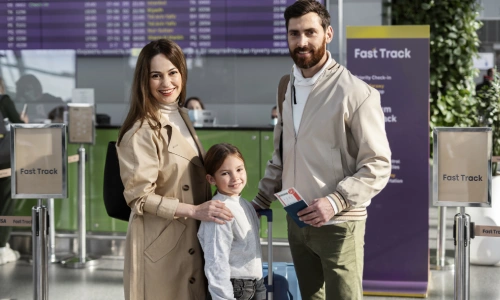
When they came through the doors — Carlos carrying Diego, Sofia walking beside them with a rolling suitcase — Maria later told us she felt like her heart stopped.
They were together. In California. As a family. Legally.
Sofia, now 16, immediately asked about enrolling in school. Diego, who had practiced his English with cartoons, proudly said “Hello, Mom” — the first time he had ever said those words to her in person.
Months 17-18: Settling In
Within weeks of arrival, Carlos, Sofia, and Diego received their Green Cards in the mail. We helped the family with the practical steps of settling in — understanding their rights and responsibilities as permanent residents, Social Security card applications, and enrollment in school for the children.
The Obstacles We Overcame
Every immigration case has obstacles. In Maria’s family’s case, the key challenges included:
- Carlos’s prior unlawful presence — Required careful legal analysis and documentation to confirm the three-year bar had expired
- Document discrepancies — Sofia’s birth certificate name spelling required correction from abroad
- Expired police clearance — Required Carlos to obtain a new clearance, adding weeks to the timeline
- Affidavit of Support concerns — Maria’s income was modest; we carefully documented her employment history and financial resources to meet the 125% threshold
- Emotional toll of extended separation — The family had been apart for years, and the stress of the immigration process compounded their anxiety. We maintained regular communication and set realistic expectations throughout.
Lessons for Other Families
- Start the process as soon as possible. Immigration processing takes time — often more time than families expect. The sooner you file, the sooner you establish your priority date.
- Consider naturalization if you are eligible. Becoming a U.S. citizen can significantly speed up the process for your family members by converting their petitions to the immediate relative category.
- Work with a knowledgeable immigration attorney. The process involves multiple government agencies, detailed legal requirements, and potential obstacles that require prompt attention.
- Gather documents early. Start collecting birth certificates, marriage certificates, police clearances, and financial documents as early as possible.
- Be patient but persistent. A good attorney monitors case progress, follows up with government agencies, and keeps you informed every step of the way.
How Bueno Immigration Helps Families Reunite
At Bueno Immigration, family reunification is at the heart of what we do. We have helped families across California navigate the family-based immigration process, including:
- I-130 family petitions for spouses, children, parents, and siblings
- Naturalization applications for permanent residents
- Consular processing coordination
- Affidavit of Support preparation
- Overcoming inadmissibility issues (unlawful presence bars, prior removal orders, criminal history)
- Waiver applications when bars to admission apply
Whether you are in San Diego, the Bay Area, or anywhere in California, our team is ready to help your family.

Ready to Start Your Family’s Immigration Journey?
If you are a U.S. citizen or lawful permanent resident who wants to bring family members to the United States, we can help you understand your options and develop a strategy tailored to your situation.
Our team provides support in English, Spanish, and Portuguese — so you can discuss your case in the language you are most comfortable with.
Your family’s story matters. Let us help you write the next chapter — together.
Call (415) 582-1608 WhatsApp Us
Visit our offices in San Diego or San Rafael
Disclaimer: This blog post is for informational purposes only and does not constitute legal advice. The case study presented in this article is a composite based on anonymized and fictionalized elements; it does not represent any specific client or case. Past results do not guarantee future outcomes. Every immigration case is unique, and the information provided here may not apply to your specific situation. Reading this post does not create an attorney-client relationship with Bueno Immigration. For advice about your individual case, please contact our office to schedule a consultation. Immigration laws and policies are subject to change, and this post reflects the law as of the date of publication.
Schedule Your Confidential Consultation
Our team speaks English, Spanish, and Portuguese to serve you in the language you're most comfortable with.
Call (415) 582-1608 today.